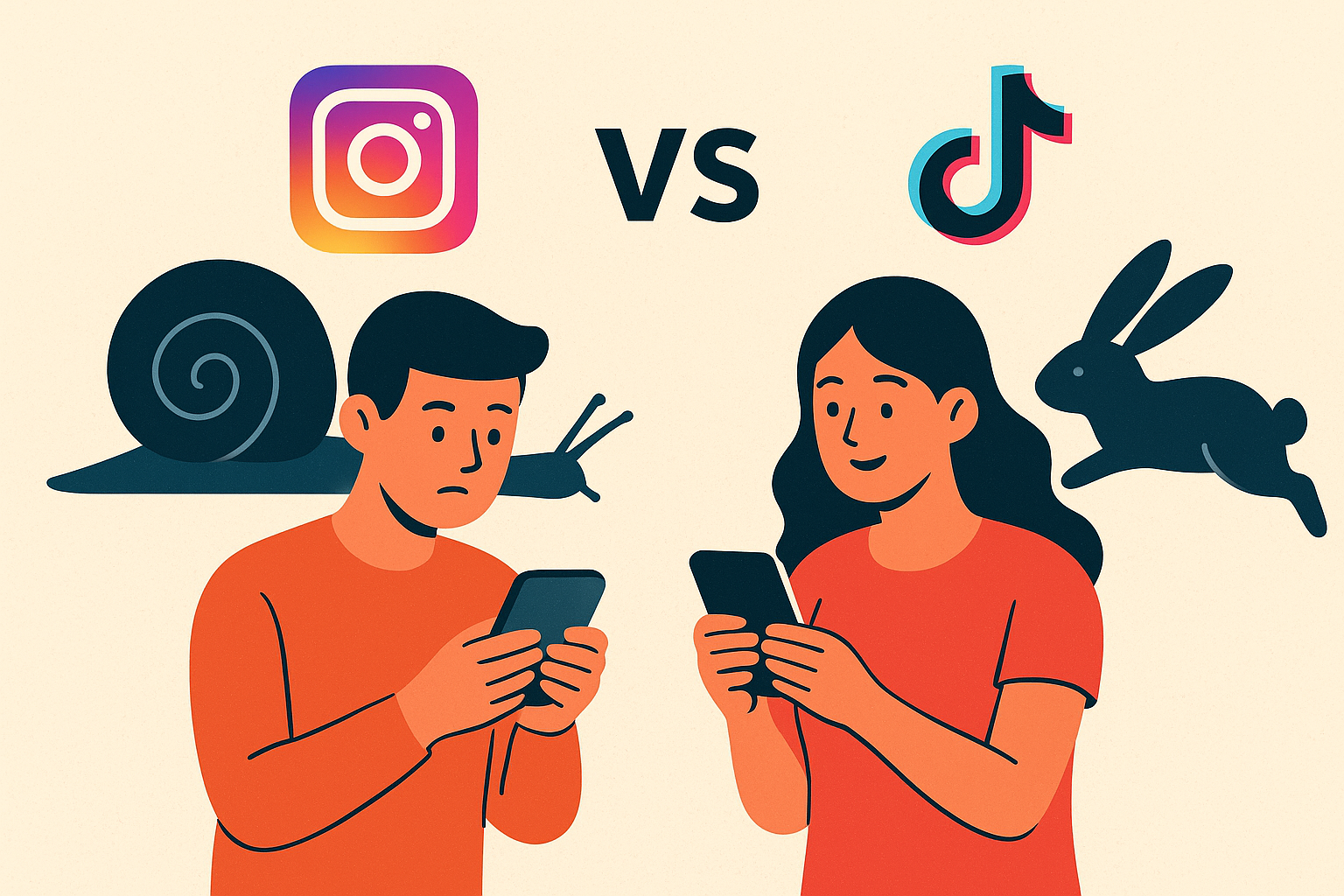
Scrolling through Instagram can feel calm and deliberate, while TikTok feels fast, urgent, and addictive. As a result, users often perceive Instagram content as slower and less immediate. This isn’t just about trends or design—it’s about how platforms structure feeds and signal content to audiences. Consequently, the speed of consumption differs, shaping engagement, attention spans, and how social media content is created for each platform.
Moreover, TikTok’s interface encourages continuous discovery, whereas Instagram balances curated feeds, stories, and notifications. Therefore, Instagram users often linger longer on individual posts but see less of the platform in a short session. The perception of “slowness” is partially tied to the platform’s deliberate pacing and the way content is surfaced to audiences.
Why TikTok Feels Faster
TikTok’s design promotes rapid consumption, keeping viewers engaged and constantly moving. More importantly, the platform prioritizes content that hooks quickly and loops endlessly.
- Auto-play and full-screen format: Videos start immediately, removing friction and accelerating consumption
- Infinite scroll with algorithmic recommendations: Users are constantly fed new content without needing to search
- Shorter video lengths: Quick edits and punchy storytelling reduce dwell time per clip
- Sound-driven engagement: Audio cues prompt immediate attention and emotional responses
- Looping and trending effects: Encourage repeated viewing and instant virality
Altogether, these features make TikTok feeds feel more dynamic, energetic, and addictive compared to Instagram.
Why Instagram Content Feels Slower
Instagram’s structure encourages thoughtful browsing rather than rapid consumption. As a result, users experience content at a calmer pace, which influences how they interact with posts.
- Mixed formats in a single app: Feeds, stories, reels, and IGTV divide attention and slow scrolling
- Curated feed and chronological options: Slower surfacing of content encourages deeper focus on individual posts
- Longer captions and commentary: Users often pause to read context and insights
- Less aggressive algorithmic pushing: Instagram surfaces posts more deliberately, emphasizing relevance over velocity
- Visual-first approach: Static images and carousel posts require more eye movement than fast videos
Because of this, Instagram content feels slower, but it can create richer engagement and encourages users to absorb more context and meaning.
How Instagram Content Affects Social Media Content
The difference in pacing changes how creators plan posts. TikTok encourages bite-sized, high-energy clips optimized for speed, while Instagram rewards more thoughtful, narrative-driven posts. Therefore, creators must tailor social media content to the platform’s rhythm to maximize impact.
Ultimately, Instagram’s slower pace isn’t a disadvantage—it provides space for reflection, storytelling, and nuanced communication. In 2026, successful content strategies will respect these platform differences, balancing rapid reach on TikTok with thoughtful engagement on Instagram.