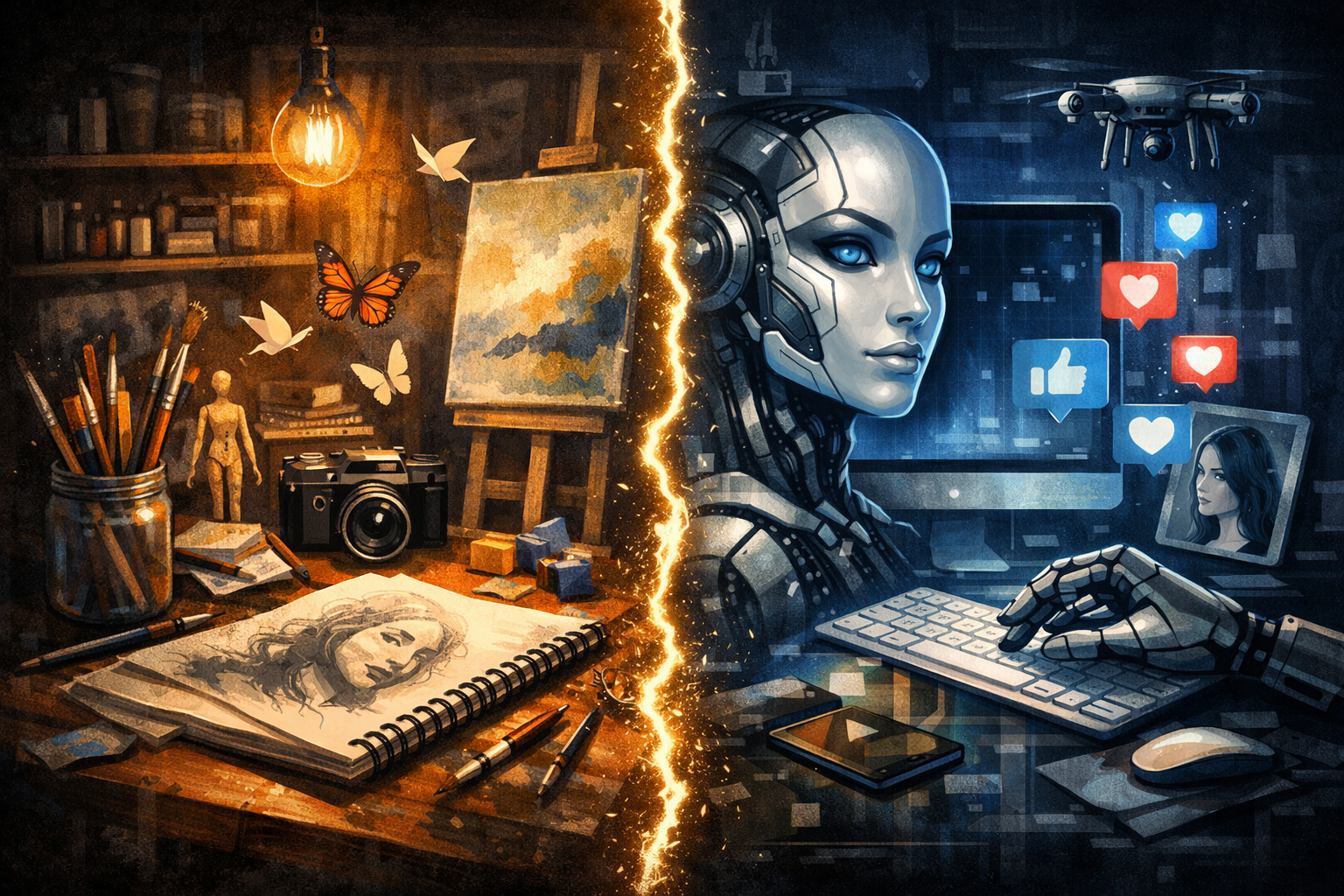
At first, the rise of AI blurred the boundaries of creativity across feeds. Brands, creators, and even everyday users experimented freely, often mixing human ideas with artificial content and execution. However, as tools improved and patterns repeated, audiences began noticing a clear shift. What once felt innovative now feels easier to categorize, especially on social media where exposure is constant.
Meanwhile, viewers have become sharper observers. Because people scroll through hundreds of posts daily, they instinctively recognize what feels intentional versus what feels generated. As a result, the line between creative expression and artificial production is no longer subtle—it’s increasingly obvious.
Why Audiences Now Spot Artificial Content Faster
Over time, familiarity has changed perception. While AI tools still move fast, repetition makes their fingerprints easier to detect. Therefore, even casual viewers sense when content lacks a human layer.
- Recognizable patterns in structure and phrasing: Posts often follow similar rhythms that feel mechanically consistent
- Emotion that feels generalized rather than lived-in: Messages sound right but rarely feel personal
- Overuse of visual symmetry and polish: Perfect balance replaces natural imperfection
- Predictable storytelling beats: Openings, hooks, and endings start to mirror each other
- Reduced surprise factor: Once the style is known, curiosity drops quickly
Because of this growing awareness, audiences judge posts faster and scroll away sooner when content feels artificial.
Why Creative Content Still Breaks Through
In contrast, genuinely creative content leans into specificity. Instead of sounding universal, it feels personal, opinionated, and occasionally imperfect. Consequently, it stands out in feeds crowded with automation.
- Distinct voice and point of view: Opinions feel owned rather than assembled
- Unpolished moments: Small flaws signal human presence
- Cultural and contextual nuance: References feel timely and intentional
- Emotional pacing that varies naturally: Not every moment is optimized for performance
- Storytelling rooted in experience: Content reflects observation, not just output
As a result, creative posts earn longer watch times and deeper trust, even when they appear simpler on the surface.
Artificial Content Is Now Clarified
Ultimately, the growing visibility of AI has not killed creativity—it has clarified it. When everything looks optimized, originality becomes easier to spot. Therefore, creators who lean into perspective instead of perfection naturally rise above the noise.
At the same time, audiences are not rejecting technology itself. Instead, they reward intention. When human insight guides tools rather than hiding behind them, social media becomes a space where creativity feels unmistakably real again.