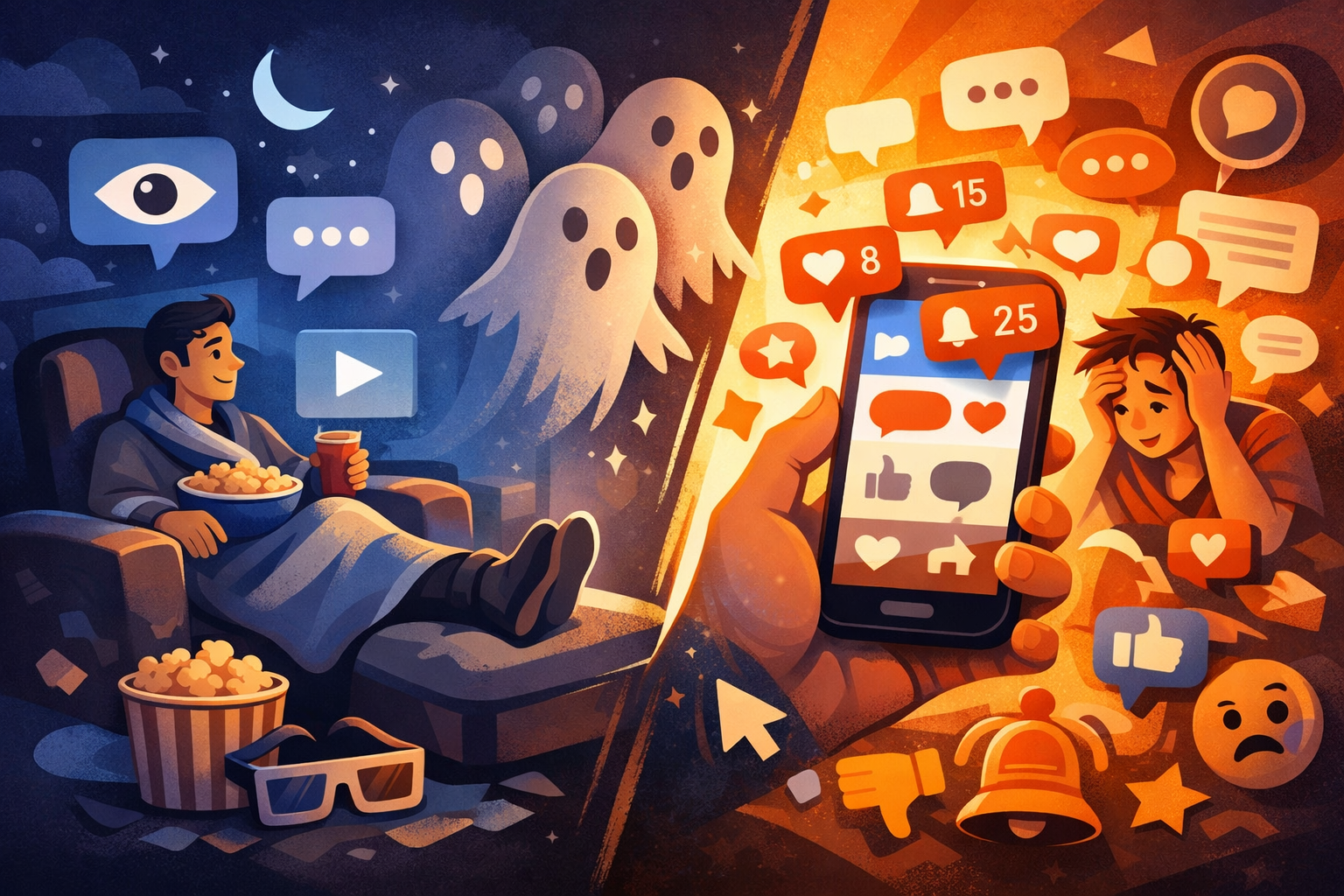
Scrolling has become second nature. Instead of liking, commenting, or sharing, many users now simply watch. As a result, social media feels quieter on the surface, even though passive consumption has never been higher. People absorb content passively, moving from post to post without leaving visible signals behind.
Moreover, this shift doesn’t mean audiences care less. On the contrary, they often feel more selective. In crowded feeds, users conserve energy and attention. Consequently, watching becomes the easiest way to stay informed, entertained, and connected without committing to interaction.
Why Watching Feels Easier Than Engaging
Watching feels effortless because it removes pressure. While interaction demands thought, timing, and visibility, passive viewing allows users to stay present without exposing themselves. As a result, many people choose to observe rather than participate.
- Lower mental load: Watching doesn’t require forming opinions, typing responses, or making decisions
- Fear of visibility: Likes and comments feel public and permanent, which discourages participation
- Decision fatigue: Constant prompts to react or respond can quickly feel overwhelming
- Time efficiency: Watching allows users to consume more content in less time
- Emotional safety: Passive viewing avoids potential judgment, debate, or backlash
Taken together, these factors explain why watching has become the default behavior across social media content, even when interest is high.
How Platforms Reinforced Passive Consumption
Platform design plays a major role in shaping behavior. Over time, features have quietly trained users to watch more and interact less. Consequently, passive consumption now feels natural rather than intentional.
- Auto-play formats: Videos begin instantly, reducing the need for user action
- Endless scrolling: Feeds encourage continuous viewing without interruption
- Story and Reel formats: Designed for quick, silent, low-effort consumption
- Algorithm signals: Watch time and completion rates matter more than comments
- Low-friction engagement: Saves and views replace visible interaction as key signals
Because of this design shift, social media content increasingly prioritizes watchability over direct participation.
What Passive Consumption Means for Creators and Brands
This behavior change doesn’t signal disengagement. Instead, it reflects evolving habits. Creators and brands must now measure success beyond likes and comments. Silent viewers still absorb messages, remember brands, and form opinions over time.
Ultimately, social media content that respects passive consumption will perform best. In 2026, the most effective posts won’t beg for interaction. Instead, they’ll focus on clarity, watchability, and emotional resonance—allowing audiences to engage on their own terms, even if that engagement stays invisible.