In the age of social media, engagement is more valuable than ever. Brands and creators no longer rely solely on likes or views; instead, they aim to spark genuine interaction. One effective way to do this is through social experiments—interactive content designed to make followers think, react, and participate. Consequently, these experiments can boost engagement, create community, and leave a lasting impression on audiences.
At the same time, social experiments offer a unique opportunity to learn about your audience. They reveal preferences, opinions, and behaviors while creating a sense of involvement. Therefore, creators and brands that design thoughtful experiments can foster stronger connections and increase loyalty among their followers.
Types of Social Experiments That Encourage Participation
Social experiments come in many forms, but the most effective ones are interactive, relatable, and shareable. By crafting content that encourages involvement, brands can spark conversations and increase reach.
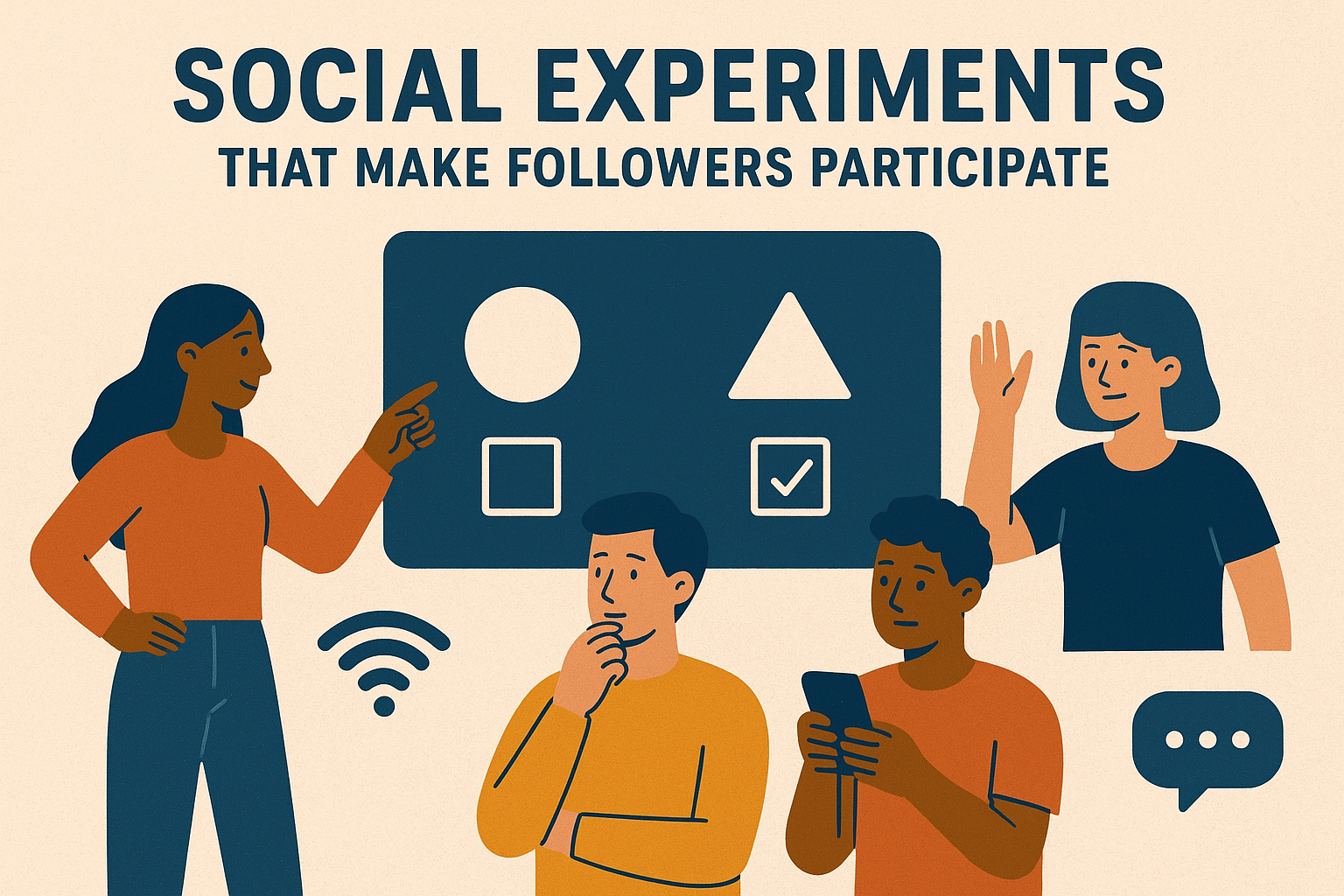
- Polls and Quizzes: Ask followers to vote on preferences, answer fun quizzes, or choose between options. This encourages immediate participation.
- Challenges and Dares: Launch challenges that invite followers to complete a task and share their results, often using a hashtag.
- Opinion-Based Questions: Post thought-provoking questions that invite comments, discussion, or storytelling.
- Interactive Stories or Reels: Use story features like sliders, multiple-choice stickers, and polls to engage followers actively.
By mixing these formats, creators can appeal to different types of audiences and encourage repeated interaction. Furthermore, these experiments create shareable content that extends reach beyond your immediate followers.
Best Practices for Running Social Experiments
Executing a successful social experiment requires planning, creativity, and ethical considerations. The goal is to engage without manipulating or misleading followers.
- Be Authentic: Ensure the experiment aligns with your brand’s voice and values.
- Keep It Simple: Make participation easy and intuitive to encourage maximum involvement.
- Use Clear Calls-to-Action: Encourage followers to comment, vote, or share with a clear instruction.
- Share Results: After the experiment, post the outcome to show followers that their participation mattered.
By following these best practices, brands can maximize engagement and build trust with their audience. In addition, social experiments provide valuable insights into audience preferences, which can inform future content strategies.
Why Social Experiments Work
Social experiments succeed because they combine curiosity, participation, and social validation. People enjoy sharing opinions, testing knowledge, and being part of a larger conversation. Consequently, interactive experiments create a sense of community while keeping followers invested in the content.
- Curiosity Drives Engagement: Followers participate to see how the experiment unfolds or to test their own opinions.
- Participation Feels Rewarding: People like contributing and seeing their input reflected in results.
- Social Validation Encourages Sharing: Followers enjoy sharing their involvement, which amplifies content reach.
- Repeat Interaction: Participants who engage once are more likely to engage again if content is fun, relevant, or thought-provoking.
Moreover, experiments increase visibility as participants share the content with their own networks. Similarly, these interactive experiences foster loyalty and turn passive followers into active community members.
Conclusion: Creating Engagement Through Experiments
Social experiments are a powerful tool for driving interaction, learning about your audience, and building a loyal community. Brands and creators who design thoughtful, ethical experiments can generate higher engagement, deeper connections, and even viral moments.
Therefore, incorporating interactive experiments into your social media strategy is no longer optional—it is a key tactic for growth. By encouraging followers to participate, share opinions, and engage with content actively, creators can turn passive viewers into active community members.