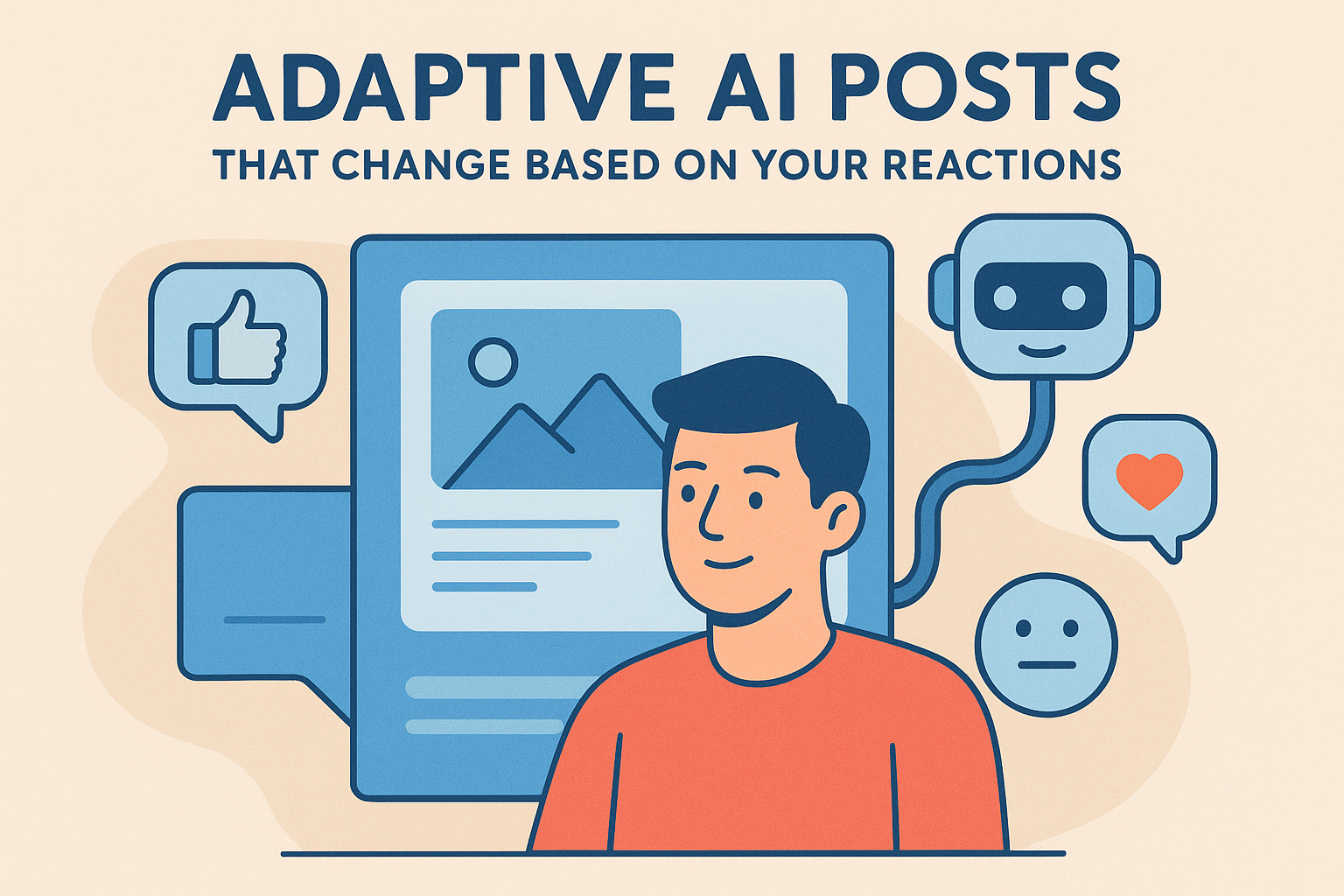
In 2026, AI-generated content is becoming more interactive than ever. Adaptive AI posts—content that changes based on user reactions—are transforming how audiences engage online. As a result, every like, comment, or share can subtly alter the AI-generated content a user sees, creating personalized experiences that feel dynamic and tailored.
Moreover, adaptive AI posts leverage real-time data to optimize engagement. Consequently, creators and brands can respond to audience behavior instantly, making AI-generated content feel responsive, relevant, and more compelling than static posts. Therefore, understanding and utilizing adaptive AI is becoming essential for anyone aiming to stand out in crowded social feeds.
Why Adaptive AI Content Works
Adaptive AI posts resonate because they provide a sense of agency and personalization. Users feel like their interactions directly shape the AI-generated content they experience, which increases attention and engagement.
- Real-time personalization: AI-generated content adapts based on clicks, reactions, or viewing patterns.
- Higher engagement: Users are more likely to interact when they see their choices reflected.
- Enhanced storytelling: Dynamic AI-generated posts evolve with audience participation.
- Replay value: Adaptive posts encourage repeated views to see new variations.
- Increased retention: Personalized AI-generated experiences keep audiences returning for more.
Consequently, adaptive AI content consistently outperforms static posts in engagement metrics.
How Creators Use Adaptive AI
Creators are experimenting with adaptive AI across multiple formats to make AI-generated content more interactive and immersive.
- Branching stories: Videos or carousels change depending on user decisions.
- Dynamic graphics: AI-generated images shift based on clicks, likes, or hover actions.
- Interactive polls: Audience input reshapes AI-generated content in real-time.
- Customized recommendations: AI suggests content tailored to individual preferences.
- Gamified experiences: Users unlock variations by interacting with AI-generated posts.
As a result, AI-generated content becomes a participatory experience rather than a passive one.
Why Audiences Respond Positively
Audiences are increasingly drawn to AI-generated content that reacts to them. In contrast to static posts, adaptive AI creates a sense of personal connection and ownership.
- Feeling influential: Users enjoy seeing how their actions affect AI-generated content.
- Personal relevance: Tailored experiences feel more meaningful.
- Shareability: Personalized AI-generated posts are more likely to be shared with friends.
- Curiosity factor: Viewers explore variations to see all possibilities.
- Community interaction: Followers compare experiences, creating conversations around AI-generated content.
Because of this, adaptive AI posts cultivate engagement, loyalty, and long-term interest.
The Future of Adaptive AI in 2026
As algorithms continue to reward personalized engagement, adaptive AI posts will dominate feeds. Furthermore, advances in AI and machine learning will enable even more sophisticated real-time adaptations.
Ultimately, creators and brands that leverage adaptive AI will offer AI-generated content that feels alive, interactive, and deeply engaging. Therefore, adaptive AI is poised to redefine the way audiences experience social media in 2026 and beyond.